An air conditioner is usually judged by one simple question: does the room feel cool?
But a properly maintained unit can do more than lower the temperature. As it circulates indoor air, it can capture some airborne dust, reduce excess moisture and prevent accumulated dirt inside the unit from being blown back into the room. That can support a cleaner and more comfortable indoor environment.
The important word is support. A normal household air conditioner is not automatically an air purifier, and maintenance cannot remove every pollutant. Understanding what the system can—and cannot—do helps homeowners get better results without expecting miracles from the remote control.
How an Air Conditioner Affects Indoor Air
Most wall-mounted split air conditioners commonly used in Malaysian homes recirculate air already inside the room. The indoor fan draws room air through a filter, passes it across a cold evaporator coil and sends the cooled air back into the space.
During that cycle, three useful things may happen:
- The filter captures some larger dust, lint, hair and other particles.
- Moisture condenses on the cold coil, helping to reduce excessive humidity while the unit is cooling.
- Continuous air movement helps distribute cooled, filtered air around the room.
When the filter, coil, blower and drain system are clean, air can move through the unit more freely. When those parts are neglected, the system may circulate less air, cool less effectively and develop dusty or musty odours.
Clean Filters Make a Real Difference
The filter is the part homeowners can usually maintain most easily. Its main job is to protect the air conditioner by catching larger particles before they coat the internal components.
A clean filter can help by:
- Trapping visible dust and lint as air passes through the unit
- Supporting stronger, more even airflow
- Reducing the amount of dirt reaching the evaporator coil
- Helping the air conditioner cool without working against a clogged air path
- Limiting the recirculation of dust that has accumulated on an overloaded filter
A dirty filter cannot keep collecting particles effectively forever. As it becomes loaded, airflow falls and some dirt may bypass the filter or remain inside the unit.
Check the manufacturer’s instructions before removing or washing a filter. Many reusable mesh filters can be gently vacuumed or rinsed and then dried fully in the shade, but designs differ. Never reinstall a wet filter or operate the air conditioner without one.
Maintenance Helps Prevent the Unit Becoming Part of the Problem
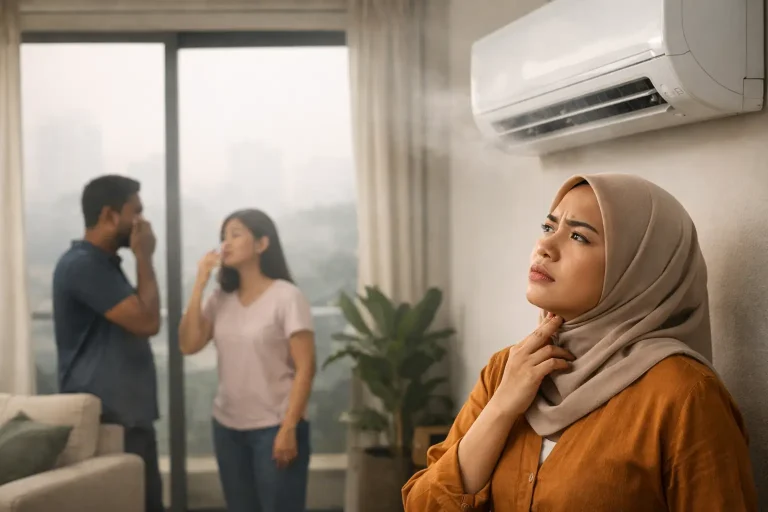
A neglected air conditioner can collect dust on its coil, fan and casing. Because the indoor section is cool and produces condensation, dirt combined with persistent moisture can also contribute to unpleasant smells and biological growth.
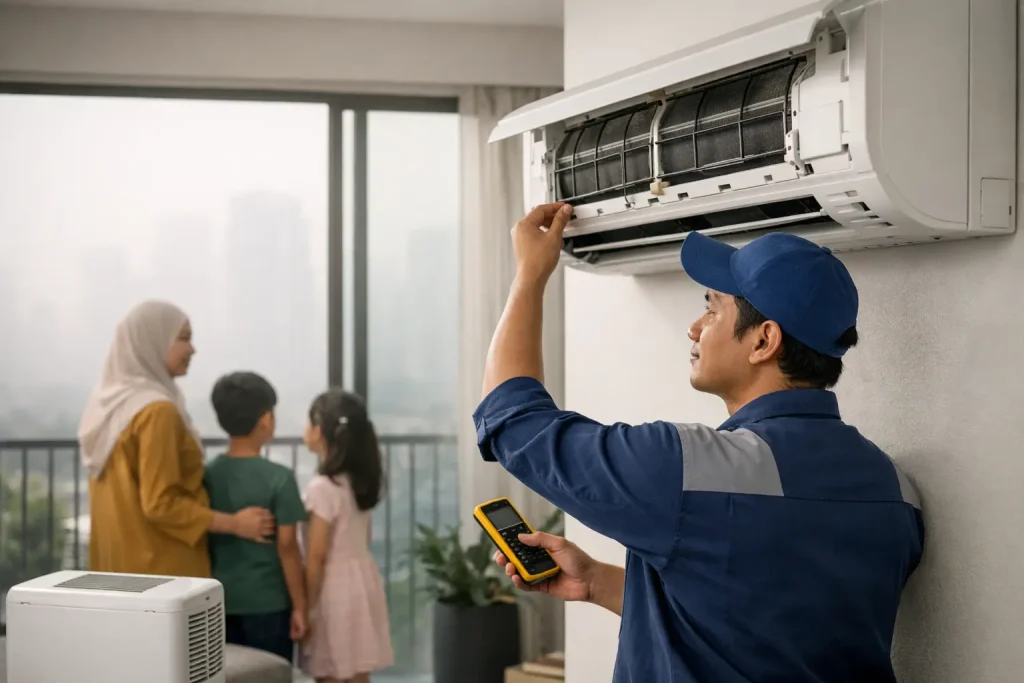
Professional servicing may include cleaning accessible internal components, inspecting the blower, clearing the drain pan and drain line, checking airflow and looking for signs that require repair.
The objective is not to “sterilise” the room. It is to stop the equipment from becoming a neglected reservoir of dust and damp residue.
If an air conditioner produces a lasting musty smell, leaks water or blows visible particles, switch it off and arrange an inspection. Spraying fragrance or household disinfectant into the unit may mask the smell without correcting the cause and could damage components.
Humidity Control Matters in Malaysia
Malaysia’s warm, humid climate makes moisture management especially important.
When operating correctly, an air conditioner removes some water vapour from indoor air as part of the cooling process. Better humidity control can make a room feel more comfortable and can make damp conditions less favourable for mould growth.
Maintenance supports this function by keeping the coil and drainage system clean. A blocked drain, dirty coil, incorrectly sized unit or system fault may interfere with moisture removal.
Running the temperature extremely low is not a substitute for proper humidity control. A sensible temperature, closed doors and windows, and a unit that is correctly sized and maintained generally provide a better balance of comfort and efficiency.
What an Ordinary Air Conditioner Does Not Remove
It is easy to describe any filtered airflow as “air purification,” but the limits matter.
Standard mesh filters are mainly designed for larger particles. They may not capture very fine particles such as PM2.5 efficiently, and they do not normally remove gases, odours or all microorganisms. Some newer models offer additional fine-particle, electrostatic or specialised filters, but their performance depends on the technology, correct installation and timely replacement.
For smoke, haze or other fine-particle concerns, a properly sized portable air purifier with an appropriate particle filter may provide more effective filtration. The air conditioner and purifier can play complementary roles:
- The air conditioner manages temperature, some humidity and general circulation.
- The air purifier is selected specifically to reduce airborne particles in a stated room size.
Keep doors and windows closed when outdoor air quality is poor, follow official health advice and replace purifier filters as directed. No filter works well when it is clogged.
Signs Your Air Conditioner Needs Attention
Arrange cleaning or professional inspection when you notice:
- Weak airflow even after cleaning the accessible filter
- The room taking longer than usual to cool
- Persistent dusty, damp or musty smells
- Water dripping from the indoor unit
- Dirt visible on the blower or coil
- Unusual rattling, buzzing or grinding sounds
- Ice forming on the coil or refrigerant pipe
- The system running almost continuously
These signs do not prove that poor maintenance is the only cause. Refrigerant leaks, electrical problems, failed sensors and worn components require proper diagnosis.
A Practical Maintenance Routine
There is no universal servicing interval. A bedroom unit used occasionally has different needs from a living-room unit running every day. Homes with pets, renovation dust, nearby traffic or prolonged haze may also need more frequent filter checks.
A practical routine is:
- Inspect the filter regularly. Check it every few weeks during heavy use and clean it when visibly dirty, following the manual.
- Keep the indoor unit unobstructed. Curtains and furniture should not block the intake or airflow.
- Keep the outdoor unit clear. Remove nearby leaves and clutter, but leave internal coil cleaning to a trained technician.
- Watch for moisture. Investigate leaks, staining and musty smells early.
- Book professional servicing based on usage and condition. Frequently used units may justify attention every three to six months, while lighter-use units may need less frequent service.
- Keep a service record. Note the date, work completed and any parts replaced so recurring problems are easier to spot.
Maintenance should be proportionate. An honest technician should distinguish routine cleaning from repairs and explain why any additional work is necessary.
Cleaner Air Starts Beyond the Air Conditioner
Even a spotless air conditioner cannot compensate for every indoor pollution source. Good indoor-air habits also include:
- Damp-wiping or vacuuming settled dust instead of dry sweeping
- Controlling water leaks and damp areas
- Using kitchen and bathroom exhaust ventilation appropriately
- Avoiding smoking indoors
- Washing bedding and soft furnishings regularly
- Keeping doors and windows closed during unhealthy haze conditions
- Using suitable air purification when fine particles are a concern
Think of the air conditioner as one part of a cleaner-home routine—not the entire solution.
Cool, Clean and Properly Cared For
A well-maintained air conditioner can support cleaner indoor air by capturing larger particles, moving air effectively and managing moisture while it cools. Regular cleaning also reduces the chance that accumulated dust and damp residue inside the unit will undermine comfort.
It will not turn an ordinary split unit into a medical-grade air purifier. But paired with good housekeeping, sensible ventilation and a suitable purifier when needed, it can play a valuable role in making indoor spaces feel fresher and more comfortable.
AeroSparkle makes routine air-conditioner care easier to arrange alongside other household services. Customers can book service, follow updates and keep maintenance records through one convenient platform—before a small warning sign becomes a hot and uncomfortable problem.
—
This article was prepared by the AeroSparkle Editor. Try AeroSparkle services today—download the AeroSparkle app.