There is a wonderfully practical Malay proverb: “Alah membeli, menang memakai.”
A natural English interpretation is: the price may hurt when you buy it, but you win by using it well for a long time.
It is the sort of wisdom that arrives whenever you are staring at two price tags and trying to convince yourself that the more expensive option is an “investment.” Sometimes it genuinely is. Sometimes it is just a very persuasive toaster.
The proverb does not mean that expensive is automatically better. It means that paying more can be worthwhile when three things are true:
- The item is genuinely well made.
- It serves a real and lasting need.
- You maintain it properly enough to enjoy its full useful life.
That third point is easily forgotten. Buying quality is only half of menang memakai. The other half is caring for what you bought.
The Real Question Is Cost Over Time
The price on the receipt tells you what an item costs today. It does not tell you what the item costs per year—or every time you use it.
A simple way to think about value is:
Cost per year = Purchase price ÷ Years of useful life
For clothing and other frequently used items, another useful measure is:
Cost per use = Total ownership cost ÷ Number of uses
“Total ownership cost” includes the purchase price plus reasonable cleaning, servicing and repair expenses.
These calculations are not perfect. They do, however, stop us from judging value by the price tag alone.
The Jacket That Wins by Being Worn
Imagine two jackets.
- Jacket A costs RM200 and lasts two years.
- Jacket B costs RM800 and lasts ten years with proper care.
If both are worn 40 times a year:
Jacket A: RM200 ÷ 80 wears = RM2.50 per wear
Jacket B: RM800 ÷ 400 wears = RM2.00 per wear
The expensive jacket is cheaper per wear—but only if it actually survives for ten years.
Now add professional dry cleaning for Jacket B twice a year at an illustrative RM25 per visit:
- Cleaning over ten years: RM25 × 2 × 10 = RM500
- Total ownership cost: RM800 + RM500 = RM1,300
- Cost per wear: RM1,300 ÷ 400 = RM3.25
At first glance, Jacket A looks cheaper again. But if five RM200 jackets are needed across the same ten years, their purchase cost becomes RM1,000. Add the inconvenience of replacement, inconsistent fit and the possibility that they are worn less often, and the comparison becomes more nuanced.
The lesson is not “always buy the RM800 jacket.” It is: buy the jacket whose quality, usage and care plan make sense together.
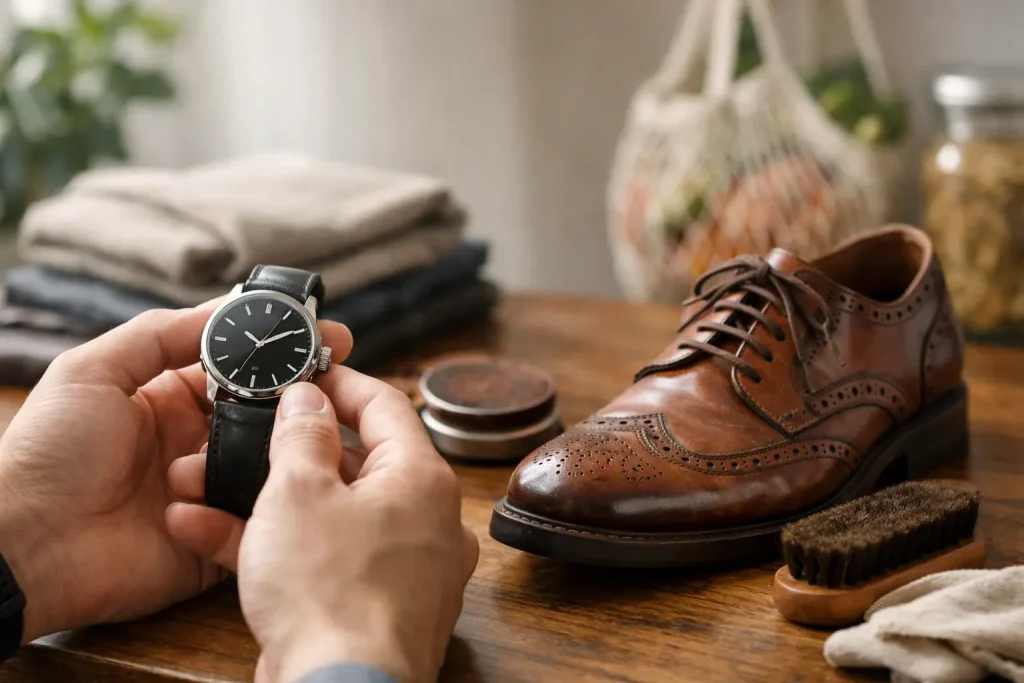
Certain garments cannot simply be thrown into an ordinary wash. Structured jackets, formalwear, delicate fabrics, embellished clothing and some traditional garments may require professional dry cleaning, stain treatment or specialised pressing. Ignoring the care label to save RM25 can be an impressively efficient way to ruin an RM800 garment.
The Television That Needs Less Drama
Televisions do not ask for oil changes, but they still benefit from sensible care.
Consider an illustrative RM4,000 television:
- If it lasts five years, its capital cost is RM800 per year.
- If it lasts eight years, its capital cost falls to RM500 per year.
That is a difference of RM300 a year, or RM2,400 across eight years.
Extending its life does not require holding an annual birthday party for it. It may simply mean ensuring ventilation, using proper surge protection, keeping moisture away and avoiding the urge to clean the screen with whichever chemical bottle is closest.
A premium appliance bought for picture quality, energy efficiency or reliability only delivers value when its operating environment allows it to last.
The Air Conditioner That Is Quietly Keeping Score
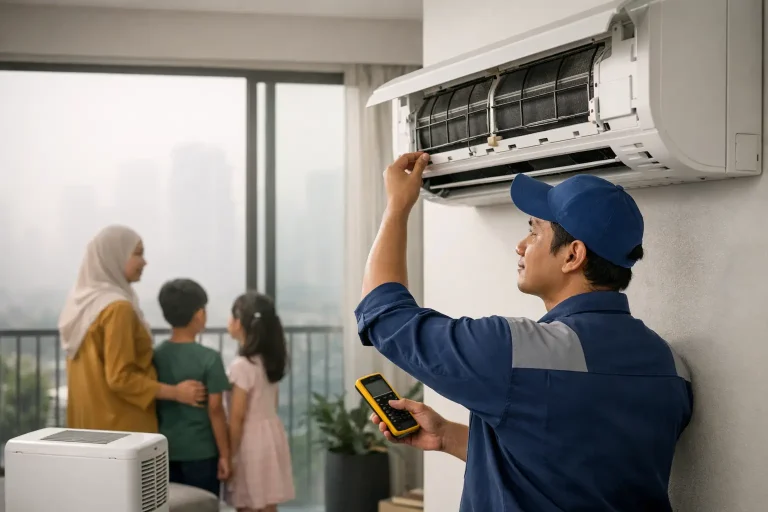
Air conditioners are easy to ignore until the room feels like a sauna and the unit begins making a noise that sounds financially significant.
Take an illustrative RM3,000 air conditioner.
Scenario 1: Little maintenance
- Useful life: six years
- Capital cost: RM3,000 ÷ 6 = RM500 per year
Scenario 2: Regular maintenance
- Useful life: ten years
- Servicing: RM180 per year
- Total ten-year cost: RM3,000 + RM1,800 = RM4,800
- Average cost: RM480 per year
In this simplified example, the direct annual saving is only RM20. That may not look exciting—but servicing may also support cooling performance, reduce the chance of major failures and help identify drainage or electrical problems early. Actual results depend on the unit, usage, environment and service quality.
Maintenance is not magic. It cannot make every appliance immortal. Its purpose is to improve the probability that the item delivers the life and performance you paid for.
A Home Is Not a “Buy Once and Forget” Product
A house may be the most expensive asset a family owns, yet it is often maintained only after something fails.
Roofs, waterproofing, wiring, air conditioners, pest control, plumbing, paint, appliances and safety systems all age differently. Small problems can also introduce larger ones:
- A minor leak can damage ceilings, walls and cabinetry.
- Termites can remain hidden while damaging timber and fittings.
- Rodents may contaminate storage areas or gnaw wiring.
- Loose or ageing electrical connections can become safety hazards.
- A neglected air conditioner can perform poorly or develop leaks.
- Water intrusion can encourage mould and deterioration.
Here is a deliberately simple example.
Suppose a RM700,000 home receives RM3,500 a year in planned inspection, servicing and minor preventive work. That equals:
RM3,500 ÷ RM700,000 × 100 = 0.5% of the property value per year
Across five years, that is RM17,500.
If the programme prevents or catches one RM20,000 repair early, it has already offset its five-year cost in this simplified scenario. If nothing major happens, the owner still receives inspections, servicing and better maintenance records.
This is not a universal rule or recommended budget for every home. It simply illustrates the logic of paying smaller, planned amounts to reduce exposure to larger, disruptive problems.
Professional pest control and electrical maintenance are especially important because treatment depends on correct diagnosis and safe execution. A can of insect spray may deal with the cockroach you can see; it cannot promise to solve the nest, entry point or conditions supporting the infestation. Electrical work is even less suitable for enthusiastic experimentation. YouTube confidence is not an electrical licence.
Cars Have Been Teaching This Lesson for Years
Most drivers accept that a car needs regular servicing. Engine oil, filters, fluids, tyres, brakes and batteries do not improve through motivational speeches.
Consider a RM120,000 car, ignoring financing, resale value and insurance for simplicity:
- Kept for seven years: RM120,000 ÷ 7 = approximately RM17,143 per year
- Kept for ten years: RM120,000 ÷ 10 = RM12,000 per year
That is a difference of roughly RM5,143 in annualised purchase cost.
Now suppose proper maintenance averages an illustrative RM2,000 a year. Spending RM20,000 across ten years can still be rational if it helps the car remain safe, dependable and useful for the longer period. Actual car economics will also depend heavily on depreciation, repairs, mileage, fuel and eventual resale value.
Nobody enjoys a workshop invoice. But it is usually preferable to receiving a much larger workshop invoice delivered by a tow truck.
Expensive Things Need Appropriate Care, Not Constant Pampering
There is a difference between maintenance and over-maintenance.
Good maintenance follows actual needs:
- Read the manufacturer’s instructions.
- Follow garment-care labels.
- Record servicing dates.
- Inspect high-risk areas.
- Fix small defects before they spread.
- Use qualified professionals for specialist work.
- Avoid replacing parts merely because someone has an ambitious sales target.
The goal is not to spend endlessly on an item because it was expensive. The goal is to make informed decisions that preserve performance, safety and useful life.
A Quick “Menang Memakai” Test Before You Buy
Before paying more for clothes, appliances, a car or anything else substantial, ask:
- Will I use it frequently?
A RM1,000 item used twice is not automatically better value than a RM100 item used every week.
- Is the higher price connected to useful quality?
Look for durability, repairability, performance, warranty and dependable support—not merely prestige.
- Can it be maintained or repaired?
An item that cannot be serviced may become an expensive disposable product.
- What will proper care cost?
Include cleaning, servicing, consumables and predictable repairs.
- How long must it last to justify the price?
Calculate cost per year or cost per use.
- Will I actually maintain it?
Honesty is cheaper than optimism.
Maintenance Is Also a Form of Sustainability
Extending the useful life of clothes, appliances, vehicles and household fittings can reduce unnecessary replacement and waste.
A garment professionally cleaned when required may remain wearable for years. A well-maintained air conditioner may avoid premature replacement. A repaired appliance stays out of the waste stream. A protected house retains materials and fittings that would otherwise need removal and reconstruction.
The most sustainable purchase is often not a new “green” product. Sometimes it is the good product you already own, kept in service for longer.
Winning Through Use
“Alah membeli, menang memakai” is not permission to buy the most expensive version of everything. It is an invitation to think beyond the initial price.
Quality deserves care. Care protects useful life. A longer useful life can turn a painful purchase into excellent value.
That is true of a favourite jacket that needs professional dry cleaning. It is true of a home that needs pest control, electrical checks and routine servicing. It is true of televisions, air conditioners and other appliances. And it is certainly true of the car that carries the family every day.
AeroSparkle helps make that care easier by bringing professional household services—such as garment care, air-conditioning servicing, professional cleaning and pest-control support—into one convenient platform.
Buying well may be the first victory. Maintaining well is how you keep winning.
—
This article was prepared by the AeroSparkle Editor. Try AeroSparkle services today—download the AeroSparkle app.