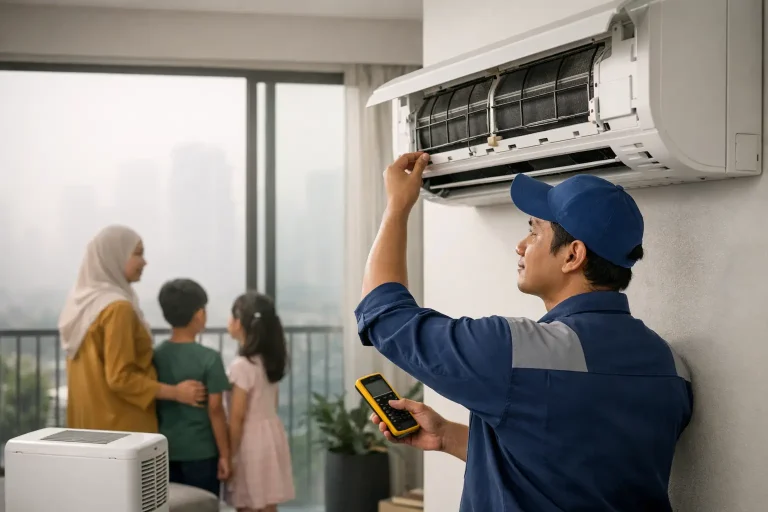
A full laundry basket, a carpet that needs attention, and an air conditioner due for servicing rarely arrive at convenient times. Home services make these tasks easier to manage by moving the coordination from phone calls, shop visits, and handwritten reminders into a booking flow you can check from your phone.
For busy households, the real issue is not always the task itself. It is the administration around it: finding a provider, confirming availability, arranging pickup, remembering collection times, following up when there is no update, and keeping track of what was paid for. A better service experience removes that back-and-forth and gives you a clear view of what is happening next.
Why household tasks become harder than they should be
A typical week can involve several different household needs. Work clothes need washing or dry cleaning. Shoes need cleaning before an event. The living room needs a deeper clean than a quick weekend tidy can provide. An air conditioner starts cooling less effectively just when everyone is spending more time indoors.
Traditionally, each job means dealing with a separate provider. That may involve different operating hours, different payment methods, different contact numbers, and no shared record of past orders. For a working professional, a parent managing a household, or a small business owner, the time spent arranging these services can become another unpaid task on an already busy list.
The most useful home-service model is not simply about having someone perform a task. It is about making the entire process organized. You should be able to request a service, select a suitable time, receive confirmation, see updates, and get help without repeatedly chasing information.
Home services work best as one connected workflow
Convenience is often described as saving a trip. That matters, especially when laundry pickup and delivery removes the need to fit a drop-off counter into your commute. But the greater benefit is visibility. Knowing that an order has been received, is being processed, or is ready for delivery makes it easier to plan your day without guessing.
A connected workflow generally has four practical stages: book the service, hand over the items or prepare the space, follow progress through updates, and receive the completed order or service confirmation. When all four stages are managed in one app, routine care feels less like a collection of errands and more like something you can schedule around your life.
This is particularly helpful for repeat needs. If you regularly send workwear for laundry, arrange periodic deep cleaning, or schedule air-conditioner servicing, order history and invoices provide a useful record. You do not need to search old messages to remember when a service was last completed or what was included in an earlier booking.
AeroSparkle is built around this kind of centralized experience, coordinating requests for laundry, cleaning, and maintenance through a single app rather than asking customers to manage multiple providers on their own.
Which services are worth scheduling ahead
Not every household task needs professional help, and the right choice depends on your time, budget, and comfort level. Folding a small load of laundry at home may be easy enough. A single spill on a rug may only need quick attention. Yet certain jobs create more disruption when they are delayed or handled without the right equipment.
Laundry pickup and delivery can be useful when the problem is time rather than washing itself. It is a practical option for people with packed workweeks, families managing frequent loads, or anyone who does not want to spend part of their weekend traveling to and from a laundry outlet. Dry cleaning is another case where a managed booking and return process helps, particularly for office wear, formal clothes, and items that require more careful handling.
For the home, deep cleaning can make sense before a move, after renovations, before guests arrive, or when regular cleaning has not kept up with the buildup in kitchens, bathrooms, and high-use areas. Carpet cleaning and shoe cleaning are often occasional needs, but they are easy to postpone because they do not fit neatly into a weekly routine. Booking them when you notice the issue prevents a small maintenance task from becoming an inconvenient last-minute problem.
Air-conditioner servicing deserves a different kind of attention. It is less about appearance and more about home comfort and planned upkeep. Waiting until cooling performance drops can leave you trying to arrange service at the least convenient moment. Setting a reminder and booking before the problem becomes urgent gives you more control over timing.
What to look for before you book
The best option is not always the provider with the longest service list. It is the one that makes the service journey clear. Before confirming a booking, check that the details are easy to understand: what service you are requesting, where and when it will take place, how pickup or access will be arranged, and how you will receive updates.
Status visibility matters because household services are not always completed while you are watching. If clothes are collected for cleaning, you need reassurance that the order is progressing. If a cleaner or technician is scheduled to visit, you need a clear confirmation and a way to get support if plans change. Notifications reduce the need to call for basic updates, while direct support remains valuable when you have a specific question.
Digital records are another small feature with a large practical benefit. Invoices and order history help households track spending, confirm previous services, and simplify reimbursement when a business-related item is involved. For small business operators, this documentation can be especially useful when staff uniforms, linens, or customer-facing spaces need regular care.
Price still matters, of course. A platform should make the cost and booking details clear before you commit. The lowest price is not always the lowest-effort choice if it comes with unclear collection arrangements, no service updates, or difficult follow-up. Consider the total value of the service: time saved, travel avoided, visibility provided, and the confidence that there is a record if you need help later.
Build a household routine that does not rely on memory
The simplest way to get value from home services is to stop treating every task as an emergency. Create a light rhythm around the needs that recur. For example, arrange laundry around your busiest workdays, plan deeper cleaning before periods when your home will be especially busy, and add maintenance reminders for appliances that affect daily comfort.
You do not need to schedule every service at once. Start with the task that causes the most friction in your week. For some people, that is the trip to drop off laundry. For others, it is finding time to coordinate a deep clean or remembering when an air conditioner was last serviced. Once that task is handled in a trackable flow, it becomes easier to organize the next one.
There is also a useful boundary to keep in mind: convenience should not mean losing control. A good app-based experience gives you more control because the booking details, service progress, notifications, and records are accessible in one place. You decide when to request the service, while the platform reduces the work required to make it happen.
For households in Klang Valley, Seremban, and Johor Bahru, this approach is especially practical when traffic, work commitments, and family schedules make a separate trip for every errand unrealistic. The goal is not to outsource every responsibility. It is to reserve your attention for the things that genuinely need it.
When your household care is organized around clear bookings and visible updates, a laundry basket or maintenance reminder stops being a disruption. It becomes one more task you can handle on your own terms.
—
This article was prepared by the AeroSparkle Editor. Try AeroSparkle services today—download the AeroSparkle app.