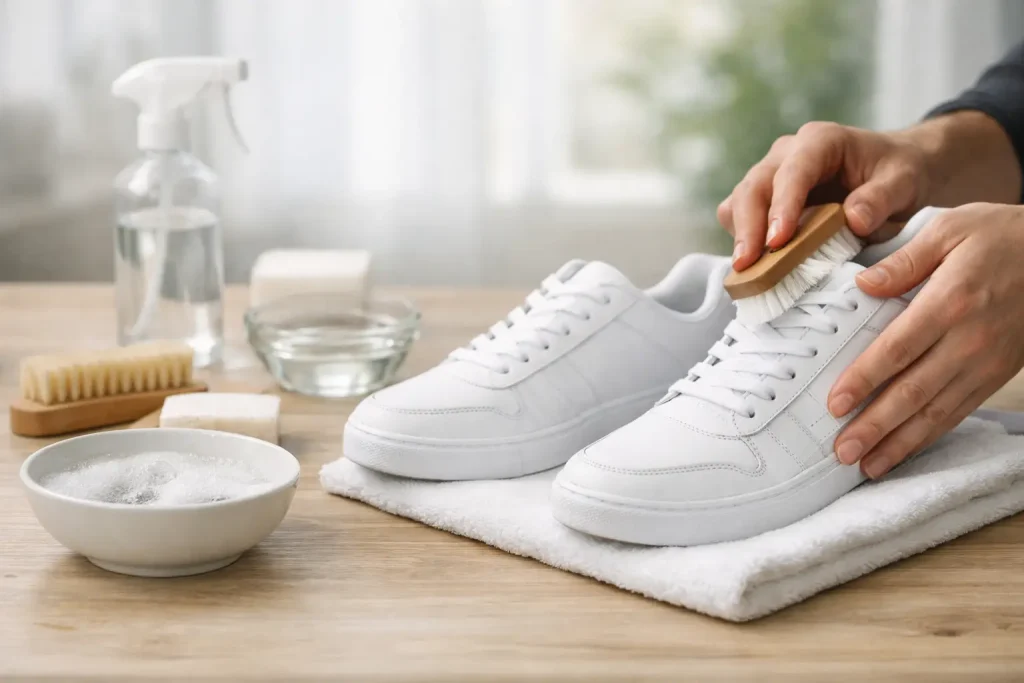
A white sneaker can look tired long before it is actually worn out. A dusty toe box, gray laces, or a stained rubber sole can make an otherwise sharp outfit feel unfinished. Knowing how to clean white sneakers properly helps you bring them back without causing yellowing, water marks, loose glue, or damaged material.
The best method depends on what your shoes are made of. Canvas and synthetic leather can usually handle a gentle hand-cleaning routine, while suede, nubuck, and some mesh pairs need a much lighter touch. The goal is not to soak the shoe until it looks new. It is to lift dirt gradually, use as little moisture as possible, and let the sneakers dry in the right shape.
Check the Material Before You Clean White Sneakers
Start by looking at the care label inside the shoe, if one is available. Then identify the main upper material. Smooth leather or synthetic leather usually tolerates a damp cloth and mild soap. Canvas is durable but absorbs water and can take longer to dry. Knit and mesh can trap dirt within their fibers, so they need gentle brushing rather than aggressive scrubbing.
Suede and nubuck are the exception. Water can leave dark spots and change the texture, while regular soap may stiffen the surface. For these materials, use a suede brush or seek specialist shoe cleaning rather than following a wet-cleaning method designed for canvas sneakers.
Also check for colored panels, metallic details, printed logos, and glued-on decorations. Test any cleaning solution on a small, less visible area first. This extra minute is far easier than trying to fix faded color or a lifted finish later.
Gather a Simple, Low-Risk Cleaning Kit
You do not need harsh chemicals to maintain most white sneakers. A soft-bristled toothbrush, microfiber cloth, small bowl of lukewarm water, mild liquid detergent, and a clean towel are enough for routine cleaning. Use a separate soft brush for the rubber soles if they are heavily marked.
Avoid bleach, especially on fabric or mesh. It can weaken fibers, create yellow tones over time, and affect stitching. Toothpaste is another popular shortcut that is less reliable than it sounds. Some formulas contain dyes, abrasives, or whitening agents that leave residue behind. Mild soap and patient cleaning are usually more effective.
If your sneakers smell damp or stale, baking soda can help inside the shoes after cleaning. Sprinkle a small amount into fully dry sneakers, leave it overnight, then shake or vacuum it out the next day. Do not turn baking soda into a thick paste for every surface, as repeated abrasive scrubbing can dull leather and rubber.
How to Clean White Sneakers Step by Step
Remove the laces and loose dirt
Take out the laces and insoles before applying any moisture. Tap the shoes together gently outdoors or over a bin to remove loose dust. Use a dry, soft brush to work around seams, eyelets, and the edge where the upper meets the sole.
Laces often hold more visible grime than expected. Soak white laces separately in warm water with a small amount of detergent for 15 to 30 minutes, then rinse well and air-dry. If they remain yellowed or frayed, replacement laces can make a bigger visual difference than another round of shoe cleaning.
Clean the upper with a damp, not wet, brush
Mix a few drops of mild detergent into lukewarm water. Dip the soft brush into the solution, then tap off excess water. The brush should be damp enough to create light foam, not dripping.
Work in small sections using gentle circular motions. Start with less visible areas so you can see how the material reacts. For canvas, focus on stained spots first and avoid saturating the entire upper. For smooth leather or synthetic leather, use a microfiber cloth for most of the work and reserve the brush for textured sections or stitching.
Wipe away soap and lifted dirt with a clean damp cloth as you go. Leaving dirty foam sitting on a white shoe can cause streaks once it dries. For stubborn marks, repeat the same gentle process rather than pressing harder with a stiff brush.
Refresh the rubber soles and toe caps
Rubber is usually the most forgiving part of a sneaker, but it collects black scuffs quickly. Use a soft brush with your mild soap solution and clean the midsole, toe cap, and outsole edge in short sections. A melamine sponge can remove stubborn scuffs from plain white rubber, but use it sparingly. It works like very fine sandpaper and can wear down printed details or matte finishes if used too aggressively.
For grooves in the outsole, use a toothpick or dry brush first. Removing packed dirt before adding soap keeps the cleaning process controlled and prevents muddy water from spreading onto the upper.
Clean the inside carefully
Wipe the insole with a lightly damp cloth and mild soap, then allow it to dry separately. If the insole is removable and badly stained, a short hand wash may be appropriate, provided the manufacturer does not advise otherwise. Avoid soaking the interior of the shoe. Excess moisture can affect adhesives, create odor, and lengthen drying time.
If odor persists after the shoe is completely dry, use baking soda overnight or place odor-absorbing inserts inside. Persistent odor combined with staining may be a sign that the sneakers need a deeper professional treatment.
Dry them slowly and keep their shape
Never put white sneakers in a clothes dryer or hold them directly against a heater. High heat can warp soles, weaken glue, and cause some white materials to yellow. Instead, stuff the shoes loosely with plain white paper or a clean white towel to absorb moisture and support the toe box.
Let them air-dry in a shaded, well-ventilated space. Direct sunlight may speed up drying, but it can also fade materials and create uneven color. Replace the paper if it becomes very damp, then reinsert the laces only when the shoes are fully dry.
Common White Sneaker Stains and What to Do
Mud is easiest to remove when it is dry. Let it harden, brush away the loose particles, and then clean the remaining mark with a damp brush. Trying to scrub wet mud immediately often pushes it deeper into fabric.
For food or drink stains, blot first instead of rubbing. Use a clean cloth dampened with mild soapy water, working from the outer edge of the stain toward the center. This helps prevent the mark from spreading.
Oil stains are more difficult, particularly on canvas and suede. Apply a small amount of cornstarch or baking soda to dry oil, leave it for several hours to absorb the grease, then brush it away. Follow with material-appropriate cleaning. If the mark remains visible, avoid adding more water and consider professional shoe cleaning.
Yellowing is not always dirt. It can come from oxidation, heat exposure, aged glue, or residue from harsh cleaning products. Gentle washing may improve surface discoloration, but it cannot always reverse material aging. Be wary of online whitening hacks that promise instant results, because they can leave shoes looking worse after a few wears.
Should You Put White Sneakers in the Washing Machine?
It depends on the shoe, but hand cleaning is the safer default. A washing machine can distort the shape, loosen glued sections, and leave water trapped inside padded areas. Canvas sneakers without leather, suede, delicate mesh, or decorative elements may tolerate a cold, gentle cycle in some cases, but only if the manufacturer permits it.
Even then, place the shoes in a mesh laundry bag, remove laces and insoles, use a small amount of mild detergent, and skip the dryer completely. The convenience is tempting, but the trade-off is less control over water exposure and friction. For expensive, structured, or sentimental pairs, hand cleaning is the better choice.
When Professional Shoe Cleaning Makes More Sense
Home care works well for regular dust, surface stains, and scuffed rubber. It is less suitable for suede, deep oil marks, mold concerns, yellowed soles, heavy odor, or sneakers with multiple materials that require different treatments. Professional cleaning can also be worthwhile when you have a favorite pair you would rather preserve than experiment on.
For busy schedules, AeroSparkle lets you arrange shoe cleaning through one app-based service flow, with booking, status updates, and support available without adding another errand to your week. It is a practical option when the shoes need more than a quick refresh at home.
A five-minute wipe after a rainy commute or dusty outing can prevent the kind of buildup that turns into a weekend project. Keep your cleaning kit nearby, treat stains before they set, and give white sneakers the slow, gentle drying time that keeps them looking crisp.
—
This article was prepared by the AeroSparkle Editor. Try AeroSparkle services today—download the AeroSparkle app.