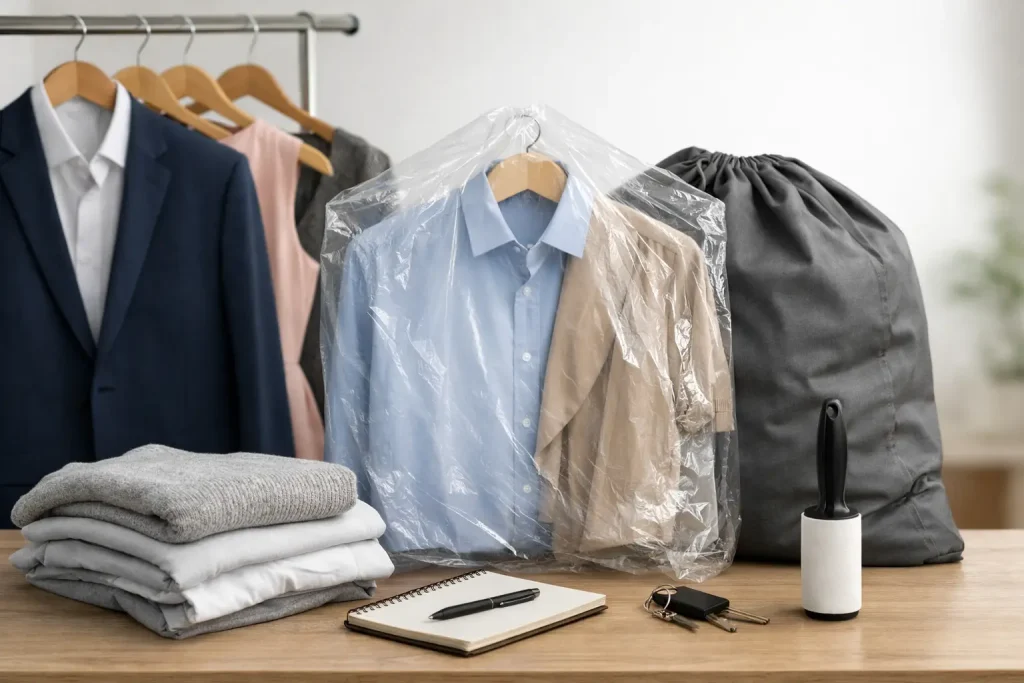
A missing receipt, a lipstick mark you forgot to mention, or a ring left in a trouser pocket can turn a simple dry-cleaning order into an avoidable follow-up. Knowing how to prepare clothes for dry cleaning before pickup helps the cleaning team handle each item with better context and gives you a clearer record of what was sent.
For busy households, preparation should take minutes, not become another weekend task. The goal is simple: send garments safely, identify anything that needs attention, and make sure your order details match the bag at pickup.
Start With the Care Label
Check the care label before adding an item to your dry-cleaning order. Labels marked “Dry Clean Only” are the obvious candidates, but dry cleaning can also be suitable for structured jackets, delicate dresses, wool pieces, silk garments, and items with linings, embellishments, or difficult-to-wash construction.
That said, the label is not the only consideration. A garment labeled washable may still need professional care if it has an oil-based stain, a formal finish, or a shape you do not want to risk changing at home. Conversely, not every item needs dry cleaning simply because it is expensive. If you are unsure, describe the fabric and concern when placing the order so the service provider can advise on the appropriate treatment.
Do not cut out care labels, even if they feel uncomfortable while wearing the garment. They provide useful fabric and treatment guidance, especially for blends, coated fabrics, or items with special trims.
Empty Every Pocket and Check the Garment
Take a moment to inspect each piece before bagging it. Empty pockets completely, including small inside jacket pockets and zippered compartments. Receipts, tissues, pens, keys, cards, and loose change can cause problems during handling and may damage the item or other garments in the order.
Also check for removable items. Detach belts, brooches, pins, and loose accessories unless they are meant to stay with the garment. If a belt must be cleaned with a coat or dress because the colors need to match, include a note in your booking rather than assuming it will be paired automatically.
Fasten buttons, hooks, and zippers where practical. This reduces snagging during transport. For delicate pieces, turn the garment inside out only if you normally would for storage or if the outer surface has fragile detailing. There is no need to over-handle the item before it reaches a professional cleaner.
How to Prepare Clothes for Dry Cleaning With Stains
Stains need information, not aggressive home treatment. Tell the cleaner what caused the mark, where it is, and roughly how long it has been there. “Coffee on the front left cuff, spilled this morning” is far more useful than simply selecting stain removal.
If you do not know the source, say so. Guessing can lead to the wrong treatment approach. It also helps to mention whether you have already tried water, detergent, stain spray, or another product. Previous treatment may affect how the fabric responds.
Avoid rubbing, scrubbing, ironing, or applying heat to a fresh stain. Heat can set many stains, while vigorous rubbing can spread them or weaken fibers. Do not use bleach or a strong spot remover on silk, wool, leather, embellished items, or garments with uncertain colorfastness. A quick photo before pickup can be useful for your own records, particularly for a visible stain or delicate item.
Professional cleaning can improve many stains, but no provider can honestly promise that every mark will disappear without risk to the fabric. Older stains, dye transfer, sun fading, and damage from previous DIY treatment may be permanent. Clear notes allow the cleaner to make the best decision rather than taking unnecessary risks.
Separate Items That Need Special Attention
You do not need to sort an order by color as you would for home washing, but separate pieces when their handling instructions differ. Keep leather, suede, fur-trimmed items, wedding wear, heavily beaded garments, or pieces with glued-on decorations apart from standard dry-cleaning items. Flag them clearly in the booking.
High-value or sentimental garments deserve an extra check before pickup. Photograph the item from the front and back, noting existing loose threads, missing buttons, wear at hems, or damaged zippers. This is not about expecting a problem. It is a practical way to keep the order record clear when an item has delicate features or pre-existing condition issues.
If several pieces belong together, such as a two-piece suit, send them together whenever possible. Cleaning only one half can sometimes create a slight difference in color or finish over time. The same applies to matching curtains, cushion covers, or coordinated formalwear. When a full set cannot be sent, mention that the item is part of one.
Bag and Label Your Order Clearly
Use a clean, dry bag that closes securely for pickup. Avoid overstuffing it. Clothes packed too tightly can crease deeply, conceal small items, and make an order harder to check. If you have multiple bags, label them with your name and indicate the total, such as “Bag 1 of 2.”
Keep dry-cleaning items separate from regular wash-and-fold laundry, shoe cleaning, or household textiles unless the booking flow specifically identifies each service. Different services may have different handling, pricing, and turnaround requirements. A clear separation helps prevent delays while the team confirms what belongs in each order.
Do not attach paper notes using pins, staples, or tape directly to a garment. These can leave holes, adhesive residue, or marks. Use the app’s order notes and item details first. If a physical note is necessary, place it inside the bag in an envelope or separate pouch.
Add Useful Notes When You Book
The most helpful booking notes are short and specific. Identify stain locations, fabric concerns, items that are part of a set, and any requested repairs or handling preferences. If a shirt has a missing button or a dress has a loose hem, describe it before collection so it is documented from the start.
Avoid vague instructions such as “please be careful.” Every item should be handled with care, but a specific instruction gives the service team something actionable: “Do not press over beading,” “Please return trousers on a hanger,” or “Call if stain treatment may affect the color.”
Use the order details to confirm the pickup address, contact number, and preferred collection timing as well. A garment may be ready, but a missed pickup window creates the same frustration as a missed delivery. App-based coordination is especially useful here because updates, status visibility, invoices, and support messages stay connected to one order instead of being scattered across calls and paper receipts.
Be Realistic About What Dry Cleaning Can Fix
Dry cleaning is a care method, not a repair for every form of wear. It may not reverse fabric pilling, stretched elastic, faded color, permanent discoloration, moth damage, or shine caused by friction. A cleaner may also need to adjust treatment for fragile fabric, old stains, or decorative details.
That is why sending an item early is usually better than waiting until a stain has aged or a small repair has worsened. If the garment is needed for an event, business trip, or work week, build in time for inspection and any necessary follow-up. Turnaround can vary by garment type, stain complexity, and special handling requirements.
Before Pickup, Do a 60-Second Final Check
Before handing over the bag, count the items and compare them with your booking. Check pockets once more, confirm that special pieces are identified, and make sure the bag is closed and dry. Then keep an eye on the order status so you know when it has been collected and when to expect the next update.
AeroSparkle makes this routine easier by keeping booking, pickup coordination, service progress, and support in one place. The preparation still matters, though: clear item details at the beginning give everyone a better path from doorstep pickup to a garment ready to wear again.
The best dry-cleaning prep is not complicated. It is a small pause before pickup that protects your belongings, preserves useful details, and lets the service team focus on the care your clothes actually need.
—
This article was prepared by the AeroSparkle Editor. Try AeroSparkle services today—download the AeroSparkle app.